
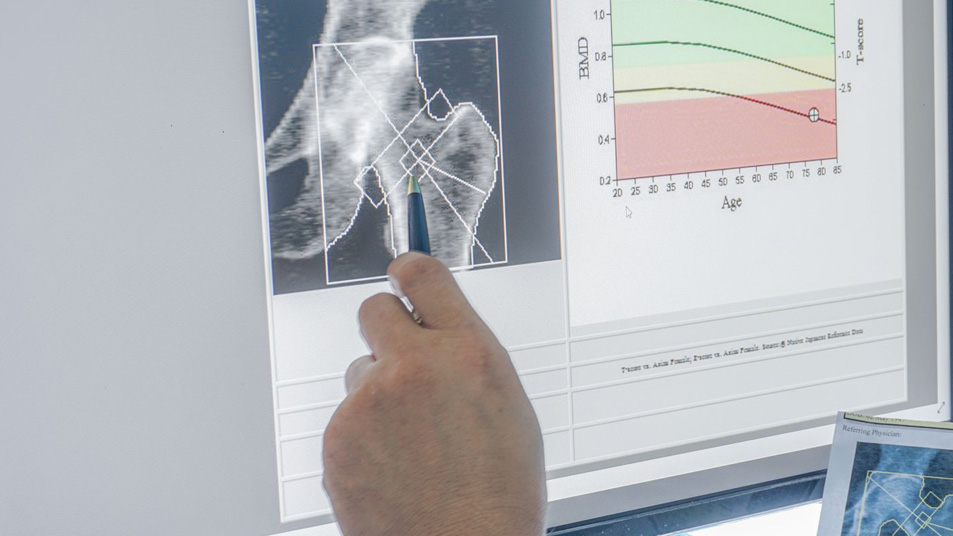
The quantity of minerals, mostly calcium and phosphorus, that make up a given volume of bone is measured by the term "bone mineral density," or BMD. It is used as a key indicator of bone strength and health, helping to diagnose and monitor conditions like osteoporosis, osteopenia, and the risk of bone fractures.
What is a Bone Mineral Density Test?
A Bone Mineral Density (BMD) test is a scan to assess the condition of your bones. Throughout your life, bones continue to form and break down. The rate at which bone is destroyed may outpace the rate at which it is formed as you age. This can result in osteoporosis, a condition where bone becomes weak and porous due to a decrease in bone density. Even a small fall might raise the risk of bone fracture if a person has weak bones. Your bone strength is measured by your BMD.
X-rays are used in the most popular kind of BMD test. Dual-energy X-ray absorptiometry (DEXA) tests are the name given to these BMD examinations. DEXA scans examine your bones using tiny, safe radiation doses. In addition to a DEXA test, you could also have a vertebral fracture assessment (VFA). A VFA checks your spine for fractures.
Measurement of BMD :
BMD is commonly assessed using non-invasive imaging techniques, including :
Dual-Energy X-ray Absorptiometry (DEXA or DXA) : The gold standard in BMD measurement. Focuses on key areas like the spine, hip, and sometimes the forearm.
Quantitative Computed Tomography (QCT) : Provides 3D imaging and can measure trabecular bone density.
Ultrasound : Used for preliminary screening but less precise compared to DXA or QCT.
Factors Affecting BMD :
Age : BMD decreases with age, especially post menopause in women.
Gender : Women generally have lower BMD than men.
Nutrition : Adequate calcium and vitamin D are essential.
Lifestyle : Physical activity, particularly weight-bearing exercises, helps maintain or improve BMD.
Medical Conditions : Conditions like hyperthyroidism, celiac disease, or rheumatoid arthritis can impact bone health.
Medications : Long-term use of corticosteroids or other drugs may decrease BMD.
What is the purpose of a BMD test?
Your doctor might measure your bone density in order to:
Check your risk of fracturing a bone.
Diagnose osteoporosis.
Measure how well osteoporosis treatment is working.
Who needs a BMD test?
Experts recommend BMD tests for :
Individuals who are women or assigned female at birth (AFAB) and are over the age of 65.
Individuals who are men or assigned male at birth (AMAB) and are over the age of 70.
Individuals under the age of 65 who are at an elevated risk of bone fractures.
Elements that may elevate your chances of experiencing bone fractures include :
Disordered eating habits resulting in reduced body weight.
Kidney disease.
Premature and early menopause.
Rheumatoid arthritis.
Sedentary lifestyle.
Smoking.
Regardless of your age, gender, or risk of fractures, your healthcare professional might suggest undergoing a bone density test if you have :
Experienced a significant drop in hormone levels.
Fractured a bone previously.
Decreased in height by 1.5 inches (3.8 centimeters) or more.
Copy Taken certain medications, such as steroids, long-term.
How to maintain Healthy BMD :
Nutrition : Make sure to consume enough calcium (1,000–1,200 mg each day) and vitamin D (600–800 IU each day).
Exercise : Engage in weight-bearing and resistance exercises regularly.
Lifestyle Decisions : Steer clear of smoking and binge drinking.
Bone Health Monitoring : Regular BMD tests as recommended, especially for postmenopausal women, men over 70, and individuals with risk factors for bone loss.